About Me: I'm Niki Vossler

Thursday, 14 January 2016

Directions - self portraiture research


RESEARCH for idea generation and FORMAT

I started my research by watching and examining several different video-based self portraits,(below are my favorites) each of the videos below are described as self portraits. each one shows a different aspect of the concept, a different idea of what a video based self-portrait is.


SHORT films:

this one is fairly straight forward, it shows the life of the subject, using their living space as basis for this,through their possessions we may know them. this idea is the most similar to my first thoughts on the subject, something visually defining, a montage of different aspects to ones self.

this one is slightly more interesting, the subject uses a style like an expressionist artist, fiddling with sound and vision while still maintaining the central themes of the one above, I enjoy its experimental style, it feels like an A/V experiment, the musical experimentation effects the visual fiercely, it exhibitions something more than the last, it shows the subject's experimental attitude to work, their work spaces and even expresses their life in its short but clear scenes.

All below cannot be embedded properly or at all.

Noel Fielding's self portrait - the guardian


in this short, the subject uses his image as seen by a camera to digitally sketch a self portrait, the camera is rolling and we get to see his mind in action as he produces the art, this visualizes his thoughts in a way that a non-motion-picture self portrait cant, it shows his comments as he works, it visualizes his creative process and allows us to see how he see's himself.

Self Portrait - Memory With sound

this short shows a side of the subject that an audience is unused to seeing, it shows her underneath everything, underneath social or object related facets of herself, it shows her bare, in black and white, it shows her hidden vulnerability. it expresses reality through a dark and dirty filter. it shows her cut back to the bones. this one i find interesting because it sends a realist message through a filter of unreality, its realism but also exaggerated, it makes things feel too real, too small in some ways.

Self Portrait: A film by Max R. A. FEDORE

this film i enjoy because of its use of stock footage, and its narrator, i dont enjoy the tone as it seems rather morose, this is caused by the deliberately unreliable narrator's tone of voice, he seems to be producing a deep yet dark tone, his talking point is all about how our individual truths are more important than facts, he explains his life view, his personal truth and his story throughout. this film makes me stop and think about my own timeline of events, and will probably influence the style, if not tone of my own self portrait.


STILL images:

Secondly I examined a number of different still self portraits, I used numerous sources, much of this section is in relation to my fascination with the artist Bryan Lewis Saunders' collection "under the influence", the rest of this section is reserved for interesting self portraits that i found while searching.

Bryan Lewis Saunders
LINK to collection HERE!!


"After experiencing drastic changes in my environment, I looked for other experiences that might profoundly affect my perception of self.  So I devised another experiment where everyday I took a different drug or intoxicant and drew myself under the influence."  - Bryan Lewis Saunders


This collection is interesting and a source of inspiration for me, it explores the sense of self through different filters, all of which are exterior, feelings and expressions created by the psyche while inebriated in different ways, from a purely scientific point of view it allows the audience to see the subject as seen through a mind changed by chemical introduction, from an artistic point of view it allows us to see how his sense of identity is changed by the substances taken, how different parts of his psyche leak onto the page dependent on the substance.

personally this collection made me stop and examine myself when i first looked through it , how i am sober, how i am drunk, how I represent myself in different environments, admittedly i self reflect often enough anyway, often this is unfortunate as i tend to feel a low sense of worth, HOWEVER this collection made me think of how i am in different social situations, rather than merely alone and has influenced my ideas in relation to how i want to translate my "self" onto the screen.

interestingly vague self portraits

the following images I feel represent interesting ideas through still's, they are all self portraits, but all say different things about their subjects, i found them likable and interesting in their designs.

No.1

No.2

No.3

No.4

No.5

FURTHUR exterior research

my final piece of externalized research is in relation to interesting content, stuff that i might use in my self portrait, things like old photos and documents from my past, but also thing in relation to media that is within the public domain, stock footage to use etc, the two below are royalty free and i hope to use them as visual metaphors at some point. the documents and old photos are with my parents and will be scanned and sent to me when needed.


Tuesday, 8 December 2015

Directions Unit Project - Drama Series Choice.


  • Genre: Crime drama
  • Created by: Mark Gatiss Steven Moffat
  • Based on: Sherlock Holmes by Sir Arthur Conan Doyle
  • Written by: Mark Gatiss, Steven Moffat and Stephen Thompson
  • Logline: it chronicles the adventures of Sherlock Holmes and his good friend, Dr John Watson, together they solve the cases that Scotland yard cannot.
  • Director: Numerous, primarily Paul McGuigan
Why Sherlock?
  • characters: the relationship between SH and JW is interesting, two people who seem almost  polar opposites, one relaxed, calm and wears cardigans, the other is a genius with boredom issues, someone with almost no social ability, yet, both characters have hidden depths, JW served in Afghanistan, and Sherlock can form meaningful relationships with other people, probably thanks to his interactions with John.
  • historical Re-booting: I quite enjoy reboots and re-tellings, so its probably not too surprising that I enjoy Sherlock, a modified, modernized version of Sir Arthur Conan Doyle's great consulting detective.
Trailer:


DIRECTIONS - WORKSHOP TASK RED RIDING

CREW


  • Director of Photography: Stuart Bentley.
  • Production Design: Joel Collins
  • Editing: Paul Machliss
CAST

Detective superintendent Maurice Jobson: Bill Nighy

Bill Hadley: Charlie Brooker

Eddie Dunford:David Tennant

Kathryn Tyler: Jenna Coleman

Barry Gannon: Robert Carlyle

Detective Chief Superintendent Bill Molloy: Mark Addy


locations:

EXT:

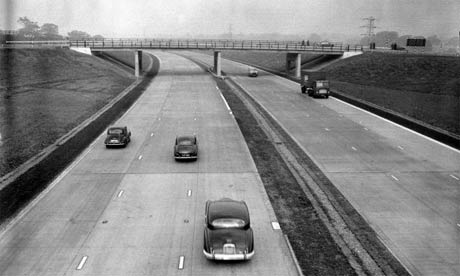
M1 motorway(1974)


construction site


INT:
Wakefield station conference room


MOODS

throughout scene 2
extreme wide shooting, trying to catch the reflections of sunlight in building's windows, the city of leeds appears high contrast due to the low level of the sun.
throughout scene 3
the construction site has to be eerie, the snow thick, diegetic sound  only to add to this, must seem peaceful in some ways.
 throughout scene 6
the conference room must be filled with fag smoke,  follow Eddie in, focus upon Det. Super. Jobson before panning to hadley, 

throughout scenes 5/7
grey motorway.


Conference Room


Thursday, 26 November 2015

First Major Project - evaluation

critical review

in this post I will Briefly outline an overview in reflection on how I feel the project went, what I think worked, dint work etc.

what worked

I think the final products, the script and the trailer turned out well, considering all the problems I had with production. I'm most happy about the final script, the trailer could still use further refinement and Re-editing of the FX, however I believe that its passable, at least. the script, I am most pleased with it at this point, thanks to the feedback the story is far clearer than my original screenplay and generally I'm glad I could incorporate some Ideas that i originally left out due to the practicalities of shooting zero budget.

what didn't

In general I think that my planning efforts didn't work in the end, i thew out my plans multiple times during pre, post and during production, planning on the fly to react to changing circumstances, next time, I'd like to be able to stick to the first plan better, and not change it so much as I work, proactive instead of reactive planning, I need to better expect the unexpected, and plan better for the known unknowns.
I also think that my original character profiles dont really work with the final version of the short, in the end i based my characters more on their actors than my original concepts, this works in zero budget without pro actors, it doesn't really work so well professionally as the actors generally can be expected to try and do that themselves, get to know their characters.

what I learned

I've learned quite a bit to be honest, in relation to the screenplay it comes down to reviewing the different versions of it, seeing how the ideas germinate and twist and change, I'v learned that in relation to my ideas, I tend to put barriers in the way of exploring my ideas fully, for instance until I was reminded by Steve, I had been thinking purely "what can I film, what cant I film etc.", this goes as far back as my idea development stage and it shows in the different iterations of my script.

I also learned that i need some prep time before a shoot, not for equipment prep, but time to review what i want to shoot, how I want to shoot it, along side that I need to be more specific  during the writing stage upon how I want it shot, I need to know better what, when where and who I'm shooting in my own mind, not on paper. on  shooting days I need to see the tress, not the forest. if you understand.

what did I develop

I think I developed a fairly well-rounded screenplay and trailer for a short film.

as far as skills go, I think I developed my camera operating to a new degree, the same for direction and especially in writing. previously I had, had training from my last course in basic script-writing, not story writing, just the physical exercise of writing a script, the lectures on story development and dramatic timing really helped me develop my screenwriting to a new level.

I developed(through the workshops) skills on a new set of cameras, and a better understanding of the more professional tools in adobe after effects.

what can I develop now

I know I'm not up to a reasonable standard in many skill areas, I think my primary week spot is my planning, so there's room to develop there, especially regarding scheduling and communication. 

In a more general sense I think I need a lot of work to get my work up to a university standard, I feel  that my work is typical of a leaver of a college course rather than that of a 1st year university student, this I think is because of a lack of vigor, and a deluded sense of how much work Vs how much time I have. 

in my next project I will further develop these areas wherein I believe I am lacking. hopefully overcoming the issues that they present as and when the time comes.

I also think I need to do some serious work on my editing and direction, my editing workflow needs to be faster and my directions to artists far more direct and understandable.


First Major Project - independent script writing research

throughout the course of writing my short, I have used many tools and guides to help me write, i will list and briefly describe them below.

CINEFIX on youtube


I learned a lot from two series' of short documentaries that cinefix released, these where Film School'd, and Art of the Scene, they both focus on different aspects of film production, and are well worth the watch time, each episode is between ten and twenty minutes long and they provide an excelent resource for information and techniques used in cinema, they also sometimes go into the history of why certain tropes/conventions exist, and why certain shooting methods where used where.

links to the relevant playlists on the Cinefix channel:
Film School'd
https://www.youtube.com/playlist?list=PL1AXWu-gGX6LgA7hx3oJEY9vGfrIVOejO
Art of the scene
https://www.youtube.com/playlist?list=PL1AXWu-gGX6LwUGY1OJ86Jv4fUk1BZy9p

The film theorists, on youtube


The film theorists are a chennel I watch regularly, mostly they break down films and talk about fan theories, however they have a series called Frame By Frame, which goes into detail about interesting techniques, a particular episode, titled The Screen Writing Mind Tricks of STAR WARS discusses the use of the parenthetical "(BEAT)"  and how its used in the Empire strikes back, discussing it by using a very well known, and poignant example. honestly I wouldn't have known the proper use of BEAT without it, and the series is a must watch if your interested in learning interesting things about film.

links to the relevant playlist on the film theorists channel
https://www.youtube.com/playlist?list=PLHLoLiL1nL8GdoFpQumt3sLa46TGzZiFP


I also used several script writing resources, these are basically how to guides that i visited when I was unsure of how to format a particular part of my script. most of my knowledge of screenwriting comes from previous experience in my last course.
listed below:
screenwriting.info
Scriptologist -
writers Room- BBC
Simply Scripts
Story Sense


First Major Project - Research Post 3/3

The Drama

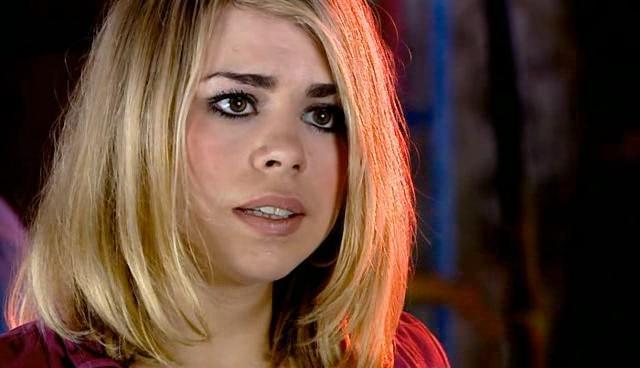
in this post I'll contextualize an episode of a drama in relation to how it has effected my own work, I'll be focusing on the First episode of modern Dr Who,(Ep.1 S.1/S.28) Titled "Rose", staring Christopher Eccleston as The Doctor, Billie Piper as Rose, and written by Russel T. Davis

Brief Outline - The drama


One assumes a person knows at least the basics of Dr Who, So, This is the first episode of the Re-started Dr who franchise, this season reintroduces the concept of Dr Who to viewers, reinvigorating a long standing, well known example of British entertainment media.
the series focuses upon the adventures of the 9th iteration or regeneration of The Doctor, and Rose, a fairly normal, low income, human from the cheap side of london, throughout the series we are introduced to new aliens, new species and reintroduced to some of the most well known adversaries and enemies of The Doctor.

Brief Outline - The episode


The episode opens by introducing Rose, an employee of a department store in central london, she encounters The Doctor while working late at the store, he promptly saves her from the Autons, a plastic-borne  Species that had infiltrated the store(and central london) primarily through shop window mannequins, The Doctor promptly destroys the store, saving Rose in the process.

the show promptly cuts to Rose's home where Her mum and boyfriend are crowding her, this is where an interesting tell can be seen, she seems to be the only person not panicking or overreacting, she's busy trying to understand what just happened, this presents her as someone who can deal with the crazy of being a companion.

this scene leads to a beautiful transition, Mickey, Rose's boyfriend gets rid of the arm at her behest, on his way out of the house he throws it into a dark Skip, the camera then follows it into the blackness, the face plate of a digital clock(and the sound of an alarm) rushes towards the lens, the shot then cuts to a CU of the digital alarm clock in rose's room, the decoration and assorted stuff on her table tells you this.


the doctor turns up at her house, gets attacked by the Auton arm, they go for a walk and my favorite screenwriting moment happens here, at 15:40, quoted below.

"Do you know like we were sayin'? About the Earth revolving? [walks towards Rose] It's like when you're a kid. The first time they tell you that the world's turning and you just can't quite believe it 'cos everything looks like it's standin' still. [looks at Rose] I can feel it. [takes Rose's hand] The turn of the Earth. The ground beneath our feet is spinnin' at 1,000 miles an hour and the entire planet is hurtling around the sun at 67,000 miles an hour, and I can feel it. We're fallin' through space, you and me, clinging to the skin of this tiny little world, and if we let go... [drops Rose's hand] That's who I am."
-The Doctor

This moment is one of the reasons I love this episode, its Russel T Davis's writing at its finest, I re-watch this episode to remind me what good writing sounds like, its poetic, functional, emotional and descriptive.

after this comes a breif break with a disposable character for some exposition, before Rose's boyfriend promptly gets captured by the Autons.

in the end the doctor and rose foil the Nestene Consciousness's plan(the controller of the Autons), Saving Mickey and the world using anti-plastic, she decides to leave with The Doctor for adventures in time and space.

How The episode relates to my own work

I mostly used the characters, Rose and The Doctor, as inspiration for my own characters, Shaz and Mia, I figured thast watching this episode could also help with working out how to introduce Shaz to the world of aliens and weirdness, and, while i did review several different approaches to this, I eventually chose a similar method to this one, an event driven introduction:

steps to introduce a character to aliens on earth as seen in both This Episode and My script:

  • introduce character(s) doing things that show who they are(tells etc.)
  • introduce a conflict wherein the alien character saves the human, revealing their extra-earthly knowledge/ tech in the process.
  • exposition/ drama related scenes revealing that the alien character is actually an alien(banter for relief goes here)
I also used Rose as a part of the inspiration for Shaz in a thematic sense, character-wise they are actually pretty far apart.

First Major Project - research post 2/3


Screenwriters,

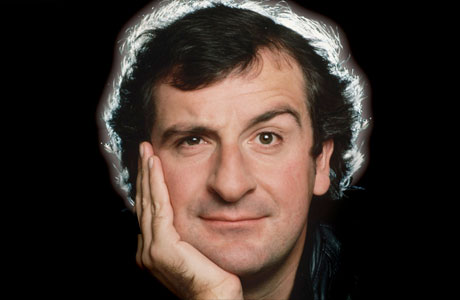
I'll be talking about two screenwriters in particular, Douglas Addams and Steven Moffat.
Both are Dr who alumni, and both write a little comedy into their drama. this post will cover how these two geniuses in particular have shaped the way i think and write, and also how that relates to Mia and Me(formerly Alien relations)

Steven moffat


The Basics:

  • born 18 November 1961 - Paisley, Scotland 
  • Studied at the University of Glasgow 
  • He was involved with the student television station, GUST (Glasgow University Student Television) 
  • worked as a teacher for three and a half years at a High School in Greenock. 
  • wrote a play called War Zones, performed at the 1985 Glasgow Mayfest and the Edinburgh Festival Fringe 
  • wrote a TV show called Press Gang, this ran for five series on ITV between 1989 and 1993. The programme won a BAFTA award in its second series. 
  • wrote two series of Joking Apart, The show won the Bronze Rose of Montreux and was entered for the Emmys. 
  • wrote Chalk, the show was based on Moffat's three years as an English teacher, didn't fare well with critics, released 1997. 
  • wrote and produced Coupling, first broadcast on the BBC in 2000, ran until 2004. 
  • wrote the drama series Jekyll, a modern version of The Strange Case of Dr Jekyll and Mr Hyde, this ran during 2007. 
  • wrote the early drafts for The Adventures of Tintin: The Secret of the Unicorn, left production to write Dr Who. 
  • Writes regularly for the Drama TV show SHERLOCK 
  • wrote several episodes of Dr Who, before becoming Executive producer and head writer in 2008, has written 40 episodes, and 4 mini-episodes, all between 2005 and 2015 


How His Work has impacted My script:

Steven Moffat has influenced, by accident or by design so much of my work, as a bit of a fan of Dr who and Sherlock, I have loved his writing for most, if not all of his tenure at the helms of both shows. Sherlock in particular influenced the character dynamics seen in my earlier drafts, the subtle hints of a relationship between the main characters was something influenced by the relationship between Sherlock And John Watson, however in my later drafts I have been influenced more by Dr Who, mostly because I've been watching the newest series as I've been writing. the easy wordplay and banter between the 12th(13th?-ish) Dr and Clara has definitely left its mark on my script.


Douglas Adams


The Basics:

  • born on 11 March 1952 in Cambridge, England. 
  • wrote a report in The Brentwoodian in 1962, 
  • wrote spoof reviews in the school magazine Broadsheet. 
  • HE designed the cover of one issue of the Broadsheet, 
  • had a letter and short story published nationally in The Eagle, in 1965. 
  • wrote A poem entitled "A Dissertation on the task of writing a poem on a candle and an account of some of the difficulties thereto pertaining" in 1970 
  • Attended Brentwood School, the prep school from 1959 to 1964, then the main school until December 1970. 
  • he was awarded an Exhibition in English at St John's College, Cambridge, going up in 1971 
  • became a member of the Footlights by 1973 
  • graduated in 1974 with a B.A. in English literature. 
  • A version of the Footlights Revue appeared on BBC2 television in 1974. this led to Adams being discovered by Monty Python's Graham Chapman. 
  • he earned a writing credit in episode 45 of Monty Python for a sketch called "Patient Abuse". 
  • Adams also contributed to a sketch on the album for Monty Python and the Holy Grail. 
  • In 1976 he wrote and performed Unpleasantness at Brodie's Close at the Edinburgh Fringe festival. 
  • he wrote sketches for The Burkiss Way, The News Huddlines, and (with Chapman), an episode of Doctor on the Go, all in 1977. 
  • wrote most, if not all iterations of The Hitchhikers Guide to the Galaxy 
  • wrote the novel, Dirk Gently's Holistic Detective Agency,published in 1987 and its sequel, published a year later 
  • Co-wrote three serials for Dr Who, "The Pirate Planet", "City of Death", and"Shada"(un-broadcast) 
  • he also wrote several early video games, these I am unfamiliar with. 


How His Work has impacted My script:

Addams' work always impacts my writing, I've been familiar with Addams' work since i was a small child, listening with my dad to HHGTTG on audio tape, then watching the original series, and eventually the 2005 film. I consider Adams a genius of writing, level with Shakespeare, most importantly though Adams' work influenced the development of my character, Mia Madeline, during my early idea stage I imagined Mia as a sort of gender-swapped Ford Prefect, this unfortunately didn't last long, however her capacity for long term secrets is definitely still in there, something she got from Ford.